

Two Mushy Foods I Love
...and so can you!

Here are two mushy foods I adore. One is not available in stores currently (at least not around me.)
Roquefort Cheese
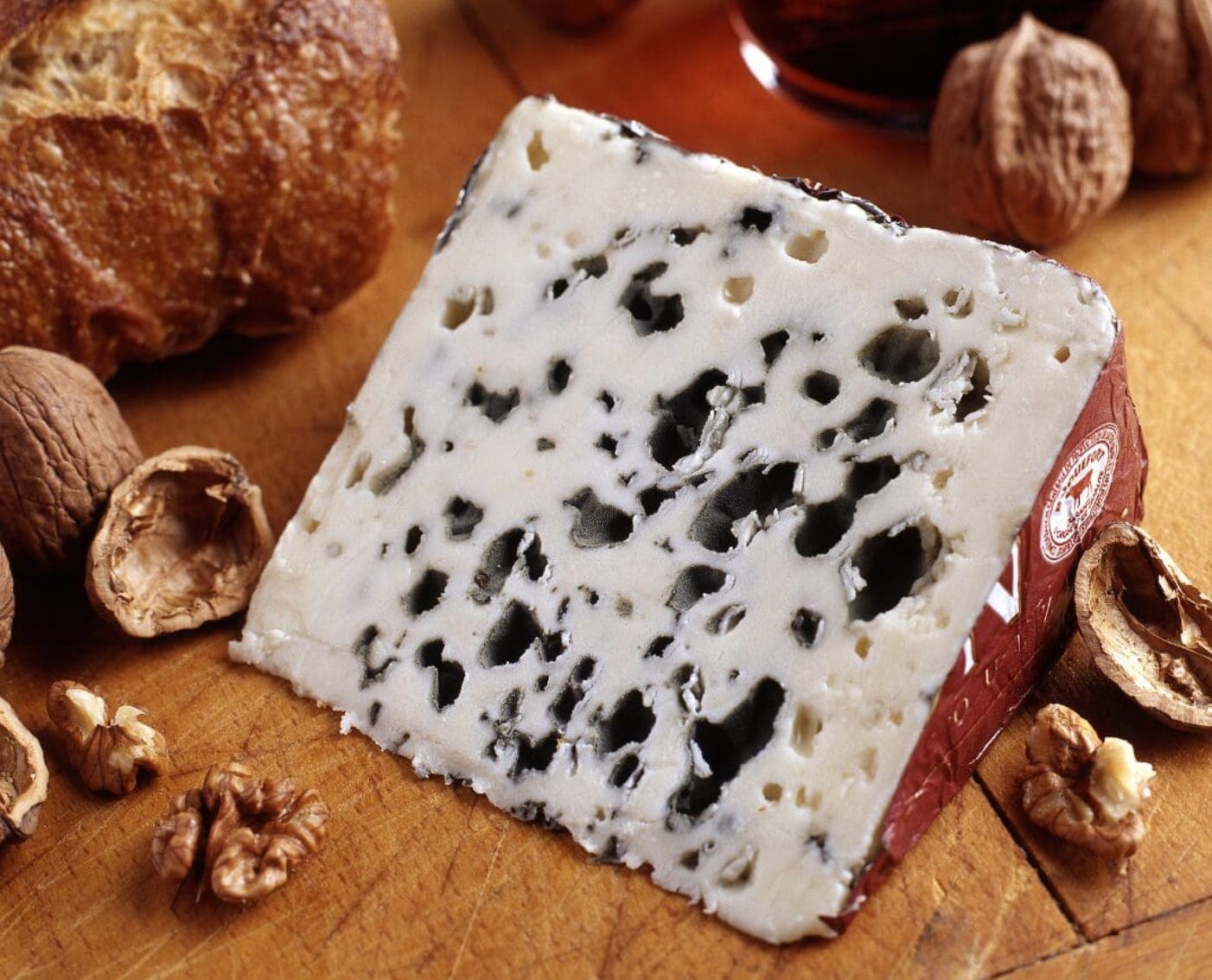
A good cheese is a cheese that’s almost not safe for consumption. There are two ways this can go. For soft cheeses, it means the rind (which you should always eat) smells like ammonia. It smells like ammonia because it is undergoing the same chemical process as anywhere else when you come across this scent: it is the breakdown of nitrogen and hydrogen and other things due to decomposition. It means your cheese is dying and this is its olfactory farewell. It’s marvelous, even though we as animals have a built-in safety mechanism when we encounter such a stench shouting STAY AWAY!
The smelliest of all soft cheeses, of course, is the Limburger, as made famous in various Looney Tunes episodes and a song by The B-52s. (← It is amusing to me that this hyperlinked video is from a concert in Dortmund, Germany, not far from the Limburger Cheese’s ancestral home.) The funny thing is that once you get past the Limburger rind (if you can) it is actually quite light and creamy and delicious.
But that’s soft cheeses. Let’s talk about those crumbly blue (or bleu) cheeses, and the King of them All: Roquefort.
Roquefort may not be the most stinking of all the blues — that prize goes, in my experience, to Gorgonzola, which I like to believe was named for those mythical Hellenistic beasts, the Gorgons. (Medusa was one.) But Roquefort is the first blue, and the one you need to try immediately if you never have.
The legend goes thusly: At some point before 79 AD (when Pliny the Elder commented on his love for this particular food) a young Gallic shepherd was out doing his thing, herding sheep and whistling at women. He was about to go on his lunch break, which he took in a nearby cave. This meant chowing down on some nice French bread and some normal (e.g. not moldy) sheep cheese. But some hot jeune fille caught his eye, so he darted out of the cave to go woo her.
Whether he bonked her over the head and dragged her into a different cave is unclear, but what is believed is that, some time later, he returned to his original cave, where the dampness of the environment mixed the particles of his bread with his cheese, spreading gross blobs of fungus from the Penicillium genus all around.
They didn’t have Uber Eats back then, so our randy shepherd took a chance and chowed down. Thus a tradition was born: intentionally eating food that has been poisoned.
As with many French foods, you can only call it a true Roquefort if it is a sheep cheese that comes from the village of Roquefort-sur-Soulzon, with special mold strains from the limestone Combalou caves. Can no other terroir produce a taste quite like the Roquefort? Well, who am I to rain on anyone’s parade. Let’s pretend that it must be from these caves, these sheep, this fungus.
Roquefort is a little pricier than others, but there definitely is some power to this cheese. In addition to its storied history, it isn’t grainy like the English Stilton (which I like, but not as much.)
Roquefort cheese pairs very well with …
Comice Pears
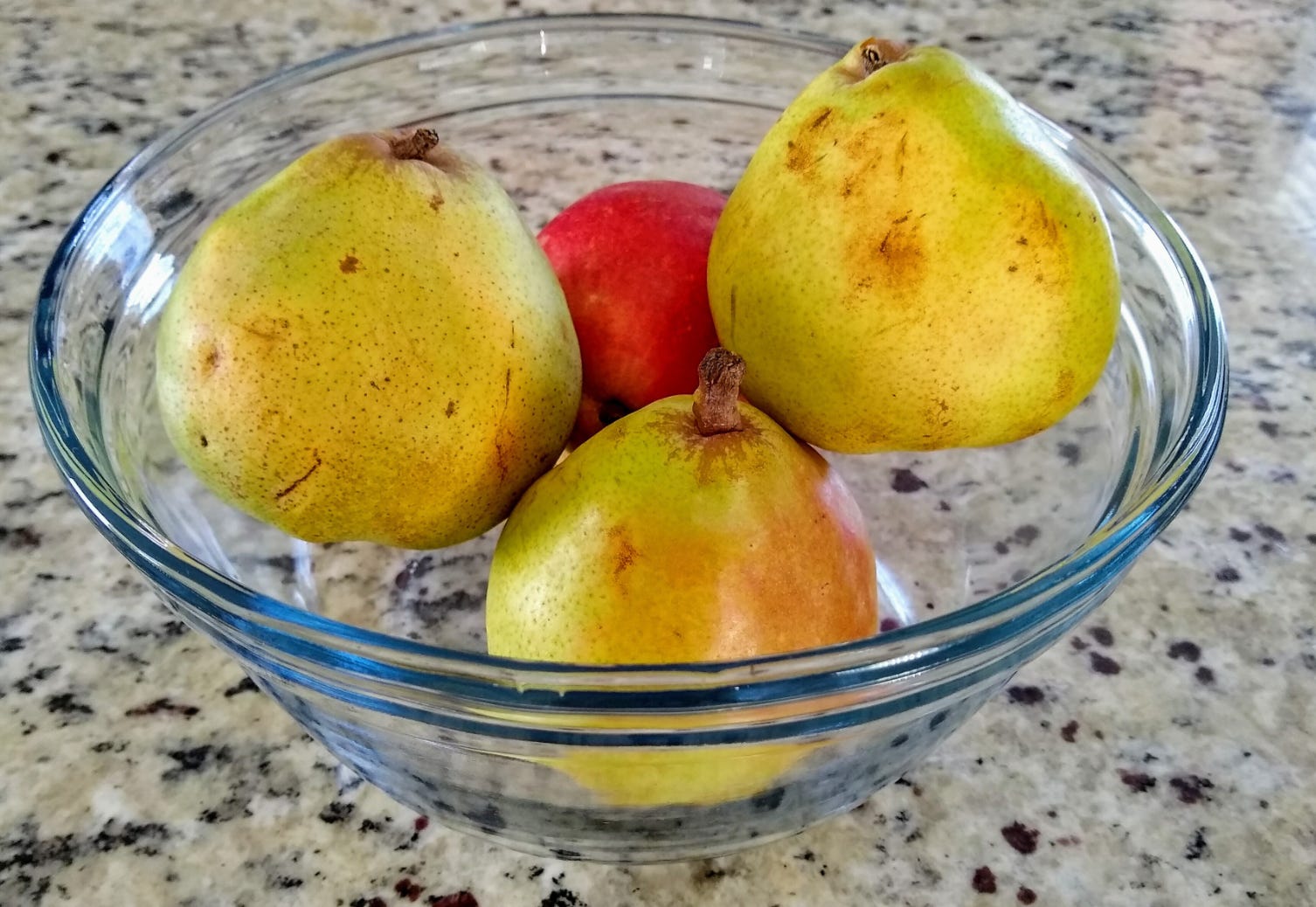
Anyone can pick up an apple and eat it, but pears make you work. You bring some back from the store and have to take a wait wait wait NOW approach, which can be annoying. Bite into it too soon and it’s like eating a raw potato. Hedge for too long and it’s foul slush.
(There are tricks to knowing when to eat a pear. You must “check the neck,” i.e. give the tip a little squeeze and let your fingertips sink in a little but also feel for a little bit of bounce back. That’s the literal sweet spot.)
D’Anjou and Bartlett pears are always good, while Red pears are usually good. (Bosc pears suck.) But the Emperor of Pears is the Comice.
First of all, they are enormous, and packed with more sugar than any other. If you bite into a ripe one, you will need a towel. (For the dribble on your chin, but maybe also for your cheeks as you may find yourself weeping with joy.) Comice pears explode with juice and the flesh is tender, smooth, and very very soft. The peel is quite thin, and not gritty at all. It quickly gets overwhelmed by the glorious sweet mush of every Comice bite.
These pears are, however, very tender, which means they bruise easily. In fact, you may pass them up in a store, thinking they are damaged goods. But this is far from the case: there are marvelous, even with a brown blemish on their yellow-green skin. Most Comices that aren't sent in a Harry & David-like gift box look like they’ve been around the block a bit, and that’s okay.
In France (again, France) they are called “Doyenné du Comice,” which translates directly as “Dean of the Committee,” which I interpret as something like “Head of the Class.” They were first cultivated in the 1840s, which means this is still a relatively new treat. Ludwig van Beethoven died before he could ever try a Comice pear, and that’s just sad. He probably would have stayed alive a little longer to compose a 10th Symphony, “Ode to Juice.”
Unlike most varietals of apple, which store well in the cold and are available year round, Comice pears live a different reality. You get them in season or you don’t get them at all. These flavor bombs will be out of reach until autumn. I shall have to survive on summer plumcots and apriums until then.